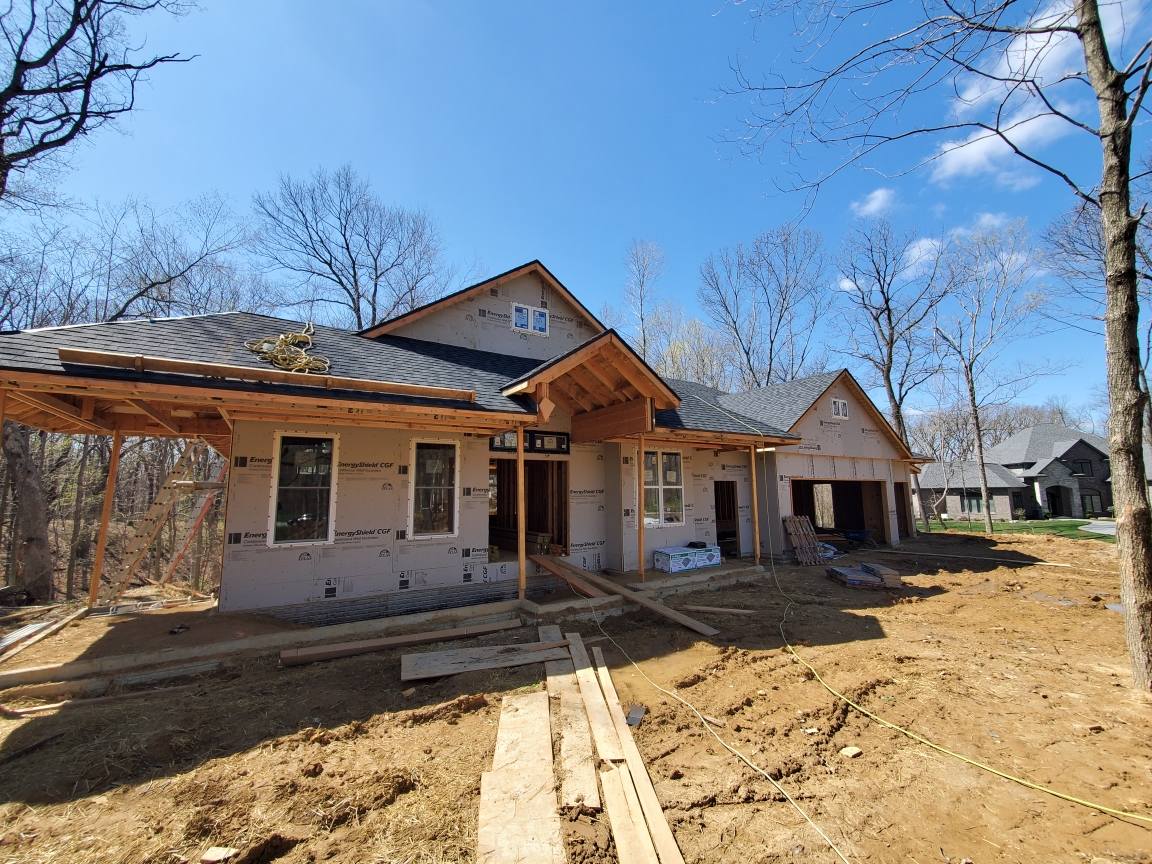
Can You Stay in Control During the Construction of New Home
Control does not fail all at once; it slips through small gaps that go unnoticed.
In the construction of new home, most breakdowns are not caused by poor design. They happen when decisions made on paper are not carried through correctly on-site. A layout may be accurate, load paths may be calculated, and systems may be planned, yet field execution begins to drift. One missed check, one unclear instruction, or one delayed update can shift the entire outcome.
This is where many technically aware homeowners and engineers face frustration. The system exists, but it is not enforced consistently. As work progresses, small deviations stack up, and control becomes reactive instead of planned.
Staying in control is not about being present every day. It is about building a process where every stage is tracked, verified, and aligned with intent. The sections below break down how that control is maintained in real construction environments.
Planning Framework That Drives Site Execution
Control in the construction of new home begins with a planning framework that connects design intent with field activity. Drawings alone are not enough. They must be translated into execution steps that each trade can follow without guesswork.
A structured plan defines sequencing, dependencies, and verification points before work begins. Without this, field teams rely on interpretation, which introduces variation. Engineers recognize that variation is the root of most downstream issues.
For new construction homes, planning must include coordination between structural, mechanical, and finishing stages. If these layers are treated independently, conflicts appear during execution. For example, mechanical routing may interfere with framing if coordination is not addressed early.
Control is maintained when planning is treated as a working system, not a static document. It must be reviewed, updated, and enforced throughout the construction of new home.
Material Behavior and Performance Control
Material selection is often viewed as a checklist item, but in reality, it defines how the structure behaves over time. The construction of a new home depends heavily on how materials respond after installation.
Structural Stability and Load Response
Materials must be evaluated for stability under real conditions. Lumber can shift due to moisture changes, and concrete can develop internal stress if curing is not managed correctly. These are not theoretical concerns; they directly affect structural alignment.
Interior Systems and Environmental Impact
Interior materials respond to temperature and humidity changes. Without proper acclimation, finishes may expand or contract, leading to visible defects and performance issues.
Supply Verification and Consistency
Material verification ensures that what is delivered matches what was specified. Substitutions without review introduce unknown variables into the system.
For new construction homes, consistent material performance reduces uncertainty. It ensures that the construction of new home behaves as expected long after completion.
Field Coordination and Decision Flow Control
Execution on site is where control is most vulnerable. The construction of new home involves multiple trades working in sequence, and coordination gaps can disrupt that sequence quickly.
Effective coordination relies on structured communication rather than informal updates.
Key practices include:
Daily logs tracking completed work and pending tasks
Shared access to updated drawings and revisions
Scheduled coordination meetings across trades
Clear assignment of decision authority
Without these systems, decisions are made in isolation. This leads to conflicts between trades and increases the risk of rework.
For new construction homes, coordination is not just about keeping work moving. It is about ensuring that each step aligns with the overall plan. When coordination is disciplined, the construction of new home remains controlled and predictable.
Cost Monitoring Through Data-Driven Tracking
Cost control is often misunderstood as staying within a budget. In reality, it is about tracking how costs evolve during the construction of new home. Every project starts with an estimate, but actual costs shift as work progresses. Small deviations in material pricing or labor hours can accumulate into significant overruns.
A structured tracking system divides costs into categories such as labor, materials, and contingency. Each category is monitored against planned values. For new construction homes, material costs are a major variable. Market changes can affect pricing, and without tracking, these changes go unnoticed until they impact the budget.
Data-driven tracking allows for early detection of variances. This enables adjustments before issues escalate. It also supports better decision-making when scope changes are required.
Maintaining financial control during the construction of new home requires continuous visibility, not just initial planning.
Timeline Sequencing and Dependency Mapping
Time control in the construction of new home is directly linked to sequencing. Each task depends on the completion of another, and any delay can affect the entire schedule.
Effective timeline management includes:
Identifying critical path activities early
Monitoring progress against defined milestones
Adjusting sequences when delays occur
Coordinating availability of subcontractors
Without dependency mapping, tasks may be started too early or too late. Both scenarios create inefficiencies. For new construction homes, sequencing is especially important during structural and system installation phases. Misalignment in these stages often leads to rework.
Maintaining timeline control is not about rigid scheduling. It is about adapting based on actual progress while keeping dependencies intact. This ensures that the construction of new home moves forward without unnecessary delays.
Quality Assurance Embedded in Each Phase
Quality control is often treated as a final step, but in the construction of new home, it must be integrated into every phase.
Inspection Points Across Key Stages
Inspections should be scheduled at critical stages such as foundation, framing, and system installation. Each inspection verifies that work meets defined standards before proceeding.
Documentation and Issue Tracking
Recording inspection results creates a traceable history of the project. This helps identify patterns and address root causes of issues.
For new construction homes, early detection of problems reduces the cost and complexity of corrections. It also ensures that the outcome aligns with design expectations.
Embedding quality assurance into the workflow keeps the construction of new home consistent and controlled from start to finish.
Conclusion
Control is not something you regain at the end; it is something you maintain at every step.
The construction of a new home becomes predictable only when planning, execution, and verification are tightly connected. Without that connection, even well-designed projects can drift off course.
P&W Builders follows a process-driven approach that aligns with this level of control. Their work across Central Illinois, including areas like Peoria, IL, and Washington, IL, shows how structured planning and disciplined execution keep projects on track.
For anyone entering the construction of new home, the focus should be on building a system that limits guesswork and tracks progress clearly. Control is not about reacting to problems; it is about preventing them before they appear.
Frequently Asked Questions (FAQs)
1. Can control be maintained during the construction of new home?
Yes, but only when there are clear checkpoints, defined responsibilities, and consistent tracking at every stage. Without a structured process, small issues can quickly turn into larger problems.
2. Do new construction homes require daily supervision?
Not necessarily, but they do require regular oversight through reports, updates, and milestone reviews. A well-managed system reduces the need for constant presence while still keeping control intact.
3. Is material verification important in the construction of new home?
Yes, verifying materials ensures that what is installed matches the approved specifications. Even small substitutions can affect long-term performance and lead to avoidable issues later.
4. Can delays affect new construction homes outcomes?
Yes, delays in one phase often impact multiple dependent tasks. This can lead to rushed work later, which increases the risk of errors and additional costs.
5. Is cost tracking necessary in the construction of new home?
Yes, ongoing cost tracking helps identify small deviations early before they grow into major overruns. It also allows better decision-making when changes are needed.